print
The Hague, 19 April 2006
Rubens & Brueghel – A Working Friendship 21 October 2006 until 28 January 2007
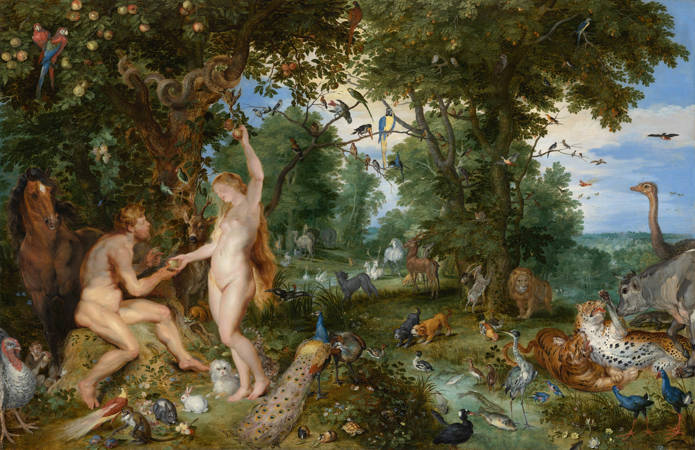
In the fall of 2006 the Mauritshuis will present the exhibition Rubens & Brueghel – a working friendship devoted to the remarkable collaboration between the celebrated painters Peter Paul Rubens and Jan Brueghel the Elder. Combining forces, these leading Antwerp artists produced some phenomenal paintings in which Rubens painted the figures and Brueghel the landscape with flowers and animals. Along with twelve joint efforts by Rubens and Brueghel, works for which they teamed up with other contemporaries will also be displayed (for example, Brueghel with Hendrick de Clerck, Rubens with Frans Snijders). Rubens and Brueghel’s Adam and Eve in Paradise in the Mauritshuis’ permanent collection is the inspiration for mounting this exhibition. Important loans have been promised by the Prado in Madrid, the Gemäldegalerie in Kassel and the Metropolitan Museum of Art in New York, among other institutions. This exhibition is jointly organised by the Mauritshuis and the J. Paul Getty Museum in Los Angeles, where it will be on view in the summer of 2006 (5 July -24 September). The exclusive sponsor is ING Nederland.
Antwerp Trade in Antwerp – including luxury items such as art - flourished in the 16th century. However, because of the Eighty Years War, Antwerp’s economy was suffering sorely by the end of that century. After the signing of the Twelve Year Truce in 1609 (1609-1621) the city gradually climbed out of its recession. The cultural climate revived and interest in and actual dealing in art increased, not only among the aristocracy, but also among the affluent upper classes. Wealthy merchants and members of the civic magistrate emulated the aristocratic lifestyle and began collecting art.
Successful artists Rubens and Brueghel were two of Antwerp’s most renowned and successful artists. Both were tremendously hard working, endowed with unprecedented creative powers, and ran extremely well-organised and productive workshops. At the height of his career, Rubens had dozens of pupils and assistants in his service. Rubens and Brueghel, moreover, moved in the same diplomatic circles of the archducal couple Albrecht and Isabella (regents of the Southern Netherlands) in Brussels, and both had built up an international clientele. Owing in part to these circumstances, a fruitful collaboration and a solid friendship emerged.
Great friends Many 17th-century Dutch and Flemish paintings were actually made by more than a single artist. Rubens and Brueghel’s first joint effort dates from 1599-1600, before Rubens’ departure to Italy. After his return in 1608 their friendship grew. Brueghel introduced Rubens to an elite brotherhood, of which he himself had already been a member for years. In turn, Rubens often helped his friend by translating letters to his Italian patron. Rubens was also the godfather of Brueghel’s two oldest children. Their bonds were close right up to Brueghel’s death in 1625.
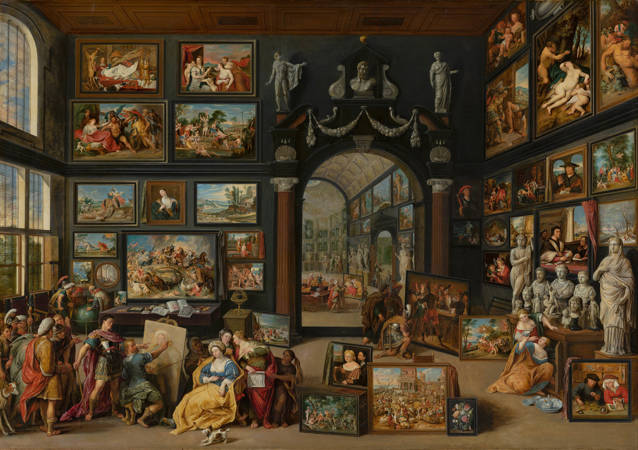
Working together Art lovers and artists alike were eager to acquire paintings produced by the two master painters that showed them at their very best. Rubens was responsible for the figures, and Brueghel for the landscape, flora and fauna. It was long thought that Rubens played the leading role in these joint works. An investigation preparatory to the exhibition, however, has revealed that in fact Brueghel was usually the initiator. Two such capable artists could not have been immune to a healthy sense of competition! They would have wanted not only to surpass each other, but them
|