下载图片
The entire collection of the Mauritshuis is available to download in high resolution.
For publications, please use a creditline, including 'Mauritshuis, The Hague'. More information.

下载图片
The entire collection of the Mauritshuis is available to download in high resolution.
For publications, please use a creditline, including 'Mauritshuis, The Hague'. More information.

下载图片
The entire collection of the Mauritshuis is available to download in high resolution.
For publications, please use a creditline, including 'Mauritshuis, The Hague'. More information.

下载图片
The entire collection of the Mauritshuis is available to download in high resolution.
For publications, please use a creditline, including 'Mauritshuis, The Hague'. More information.
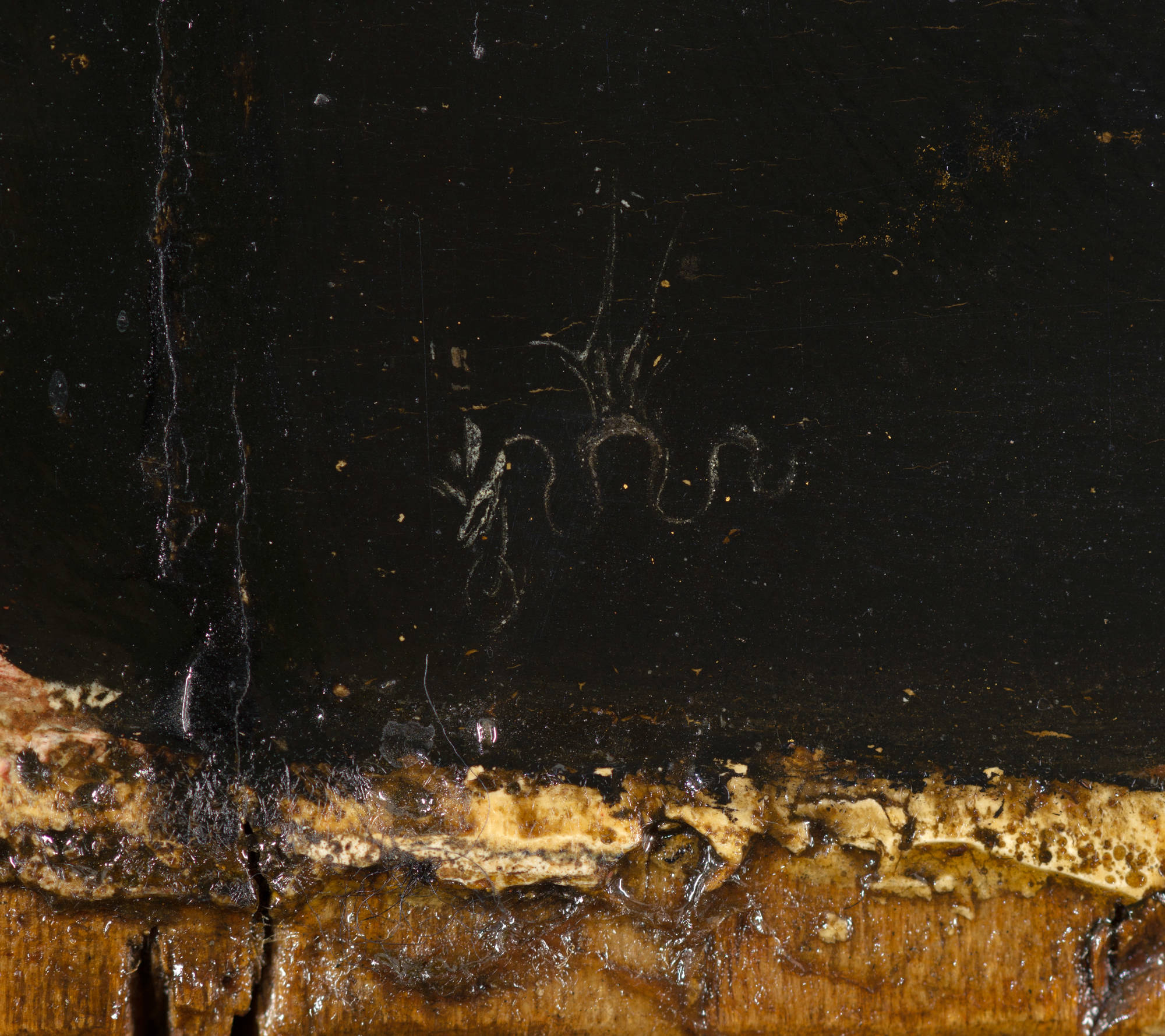
Lucas Cranach the Elder
Virgin and Child
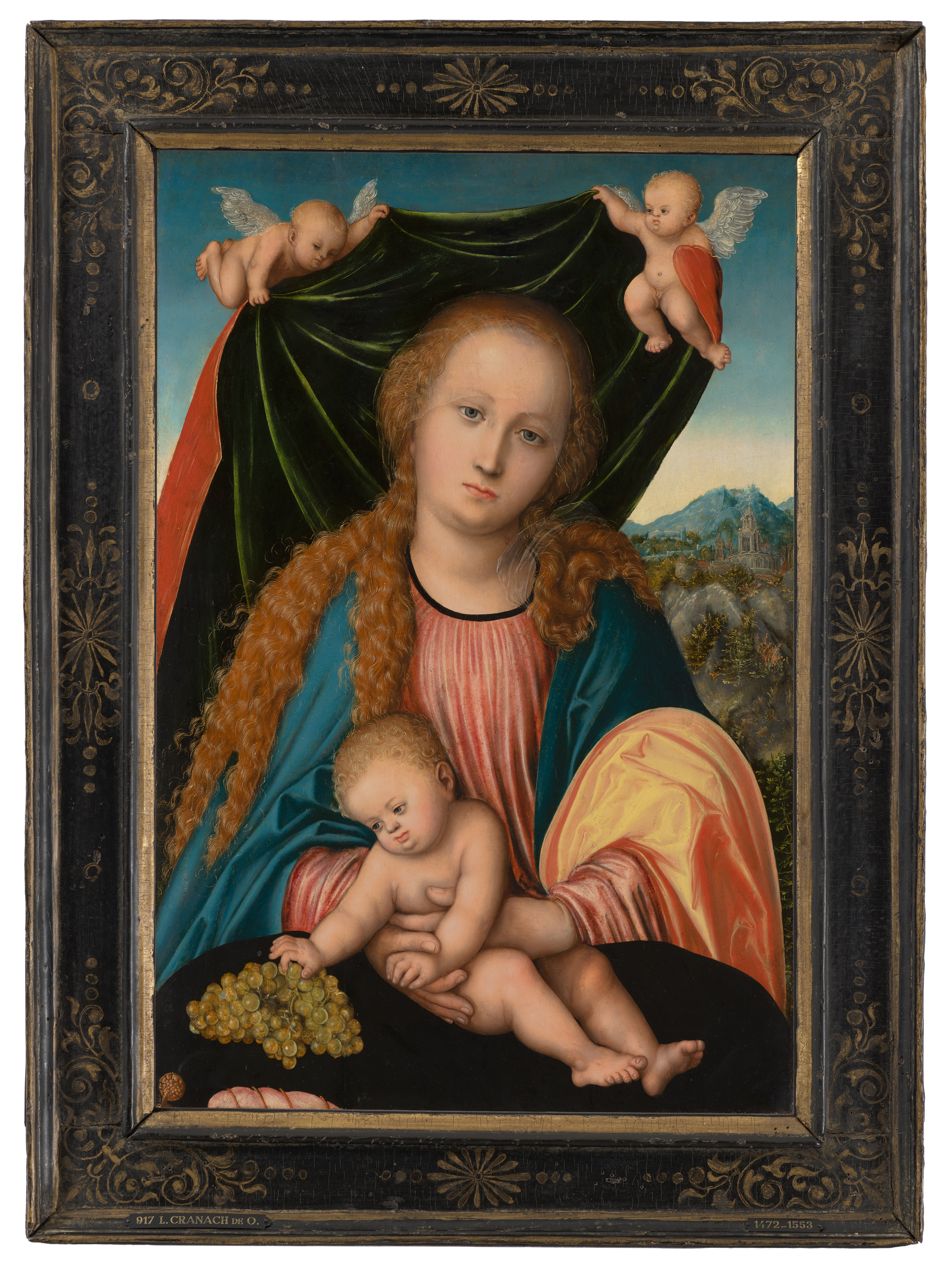
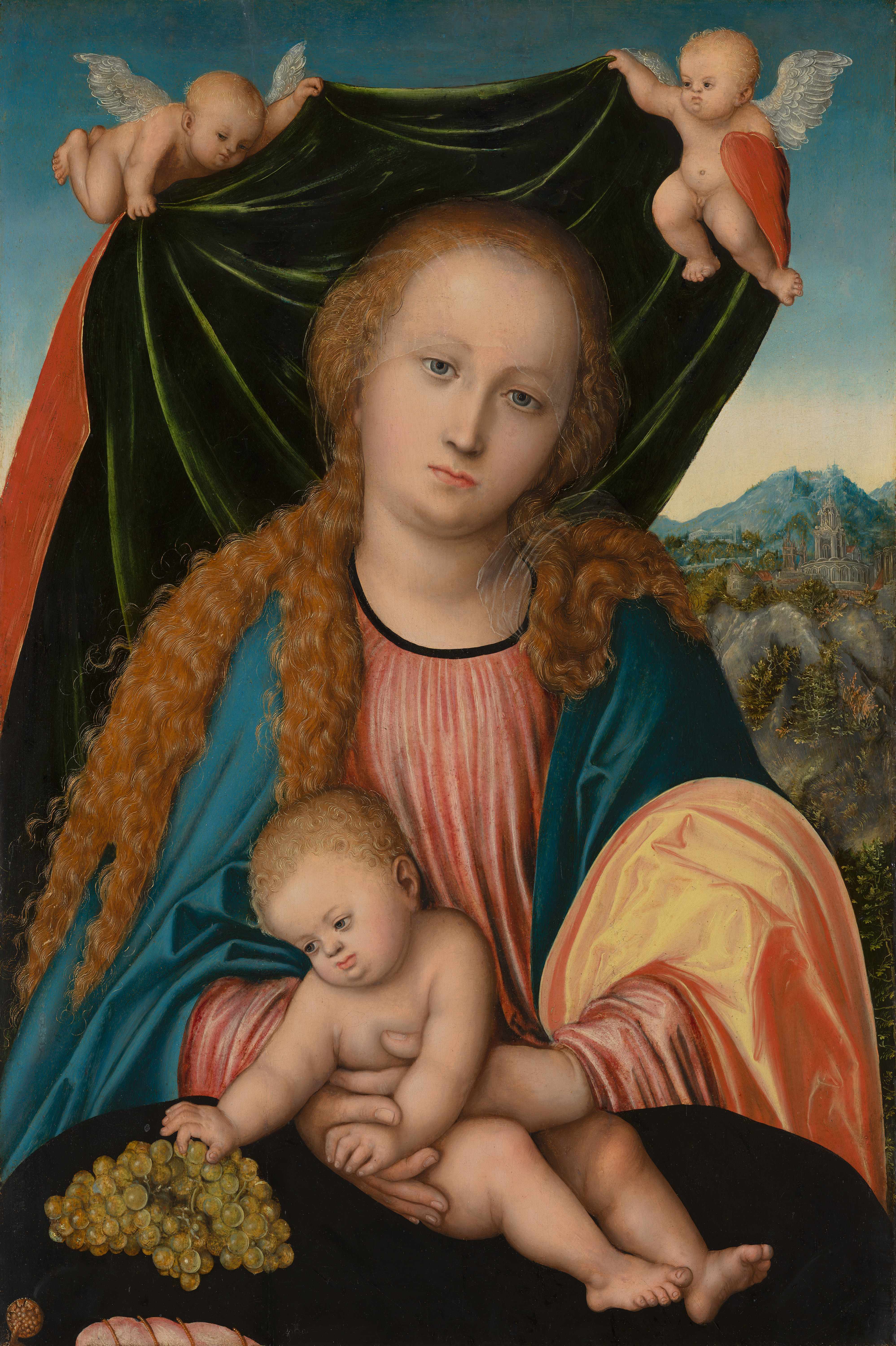
In the Middle Ages and the Renaissance, numerous pictures were made of the Virgin and her child Jesus. This Madonna is by the German artist Lucas Cranach. He painted her with a beautiful, round idealised face and long wavy hair. She is looking ahead rather submissively, while her child tries to pluck a grape – a remarkably playful gesture. Two cherubs are holding up a cloth by way of a baldachin.