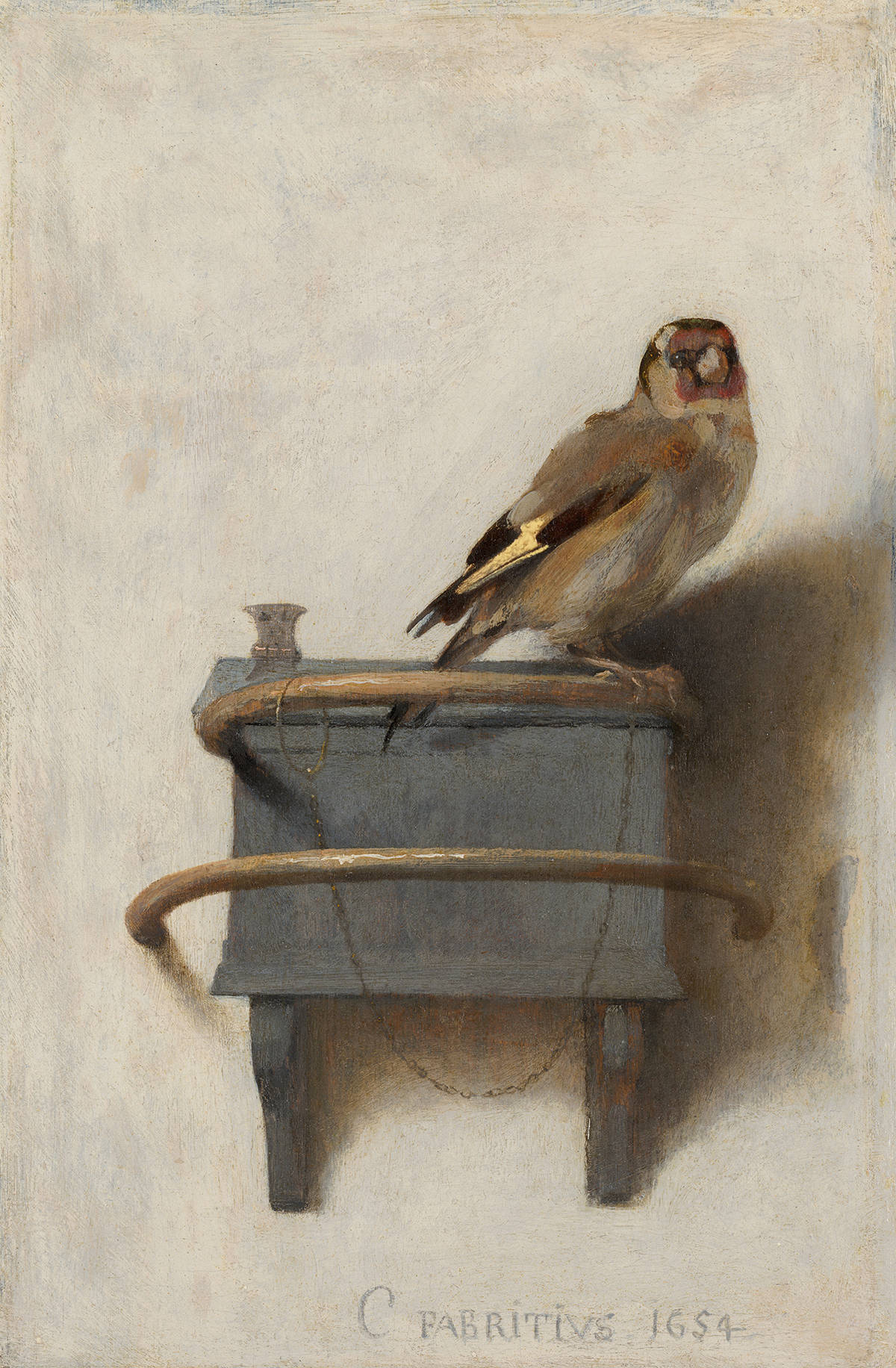
From 12 February, the Mauritshuis will present BIRDS – Curated by The Goldfinch & Simon Schama, an exhibition that focuses on our relationship with birds. No other species has captured our creative and spiritual attention quite like birds. They appear in art, poetry, religion and music, as deities or as messengers of the gods. Our fascination has everything to do with birds’ unique ability to fly. BIRDS – Curated by The Goldfinch & Simon Schama will be not so much a conventional exhibition as a birdhouse full of art, ranging from Ancient Egypt to the catwalks of today’s fashion world. Structured around a number of themes, the exhibition will offer a bird’s-eye view of the rich complexity of the relationship between birds and humans.
Simon Schama
For decades, Carel Fabritius’ 1654 painting The Goldfinch has been one of the most popular exhibits at the Mauritshuis. Taking this iconic work as the starting point, the museum and its guest curator, acclaimed British historian Simon Schama (b. 1945), will explore how birds have come to symbolise a whole range of human emotions and beliefs in our art and culture. The collaboration between the museum and Schama has come about in connection with the publication in 2023 of the Dutch translation of his new book Foreign Bodies: Pandemics, Vaccines and the Health of Nations, in which he describes how the relationship between humans and animals has become derailed.

Heavenly Messengers
Since time immemorial, birds and winged creatures have acted as intermediaries between heaven and earth. In Ancient Egypt the Ba – which had the head of a human and the body of a bird – accompanied the spirit of the deceased up to the sun and back to its human remains.
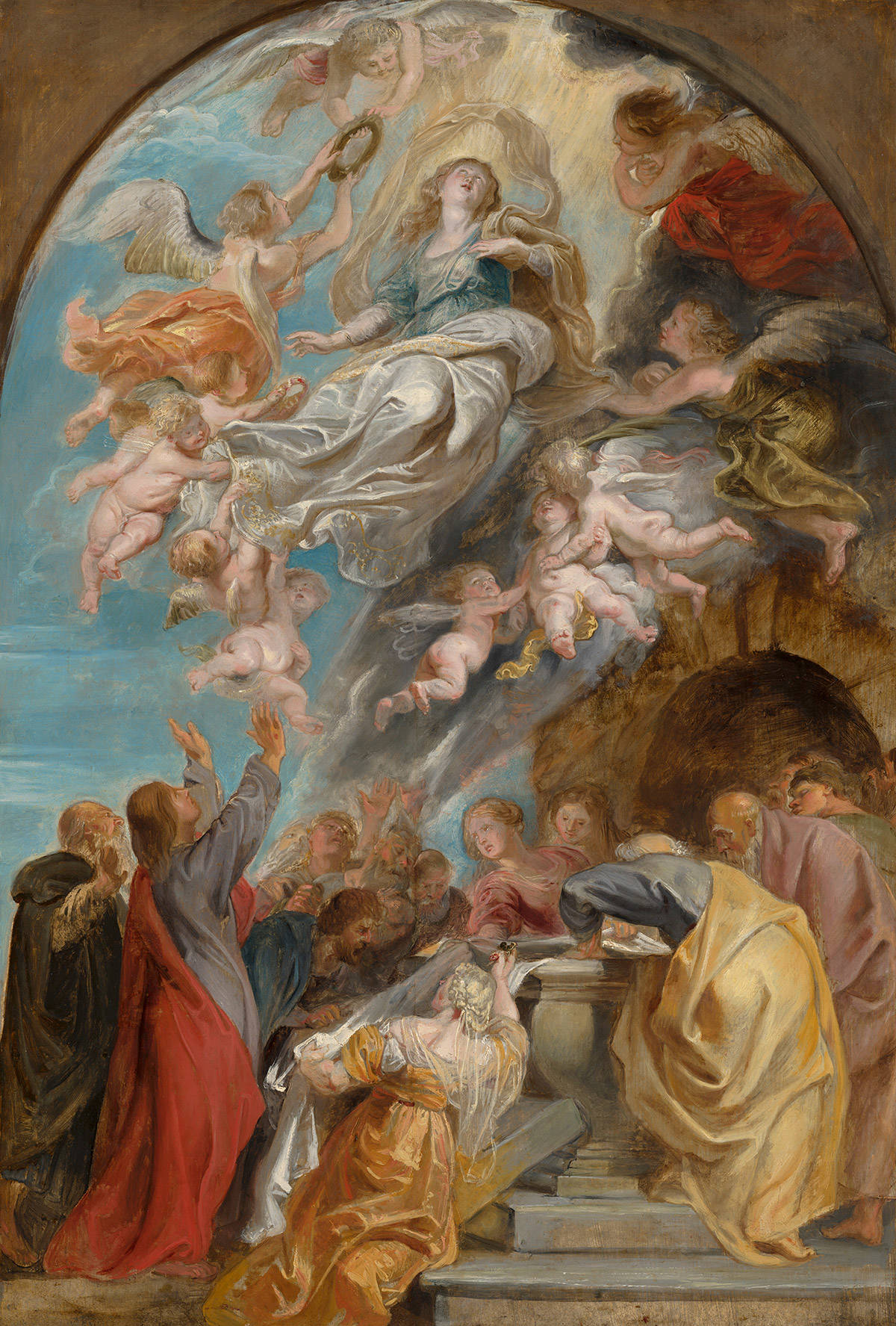
In a painting by Rubens, Mary is surrounded after her death by a host of winged children known as cherubs. A dove of peace appears on a famous 1949 poster by Pablo Picasso (La colombe). Since biblical times, the dove has been a symbolic creature. It brought an olive branch back to Noah’s ark as a sign that the Great Flood was over.
Envying Avians
For centuries humans have envied birds because they can do something we cannot: fly. Of all the many depictions of Icarus flying too close to the sun and paying the ultimate price (he crashes to earth), Hendrick Goltzius’ image of Icarus in freefall is perhaps the most astonishing. Henri Matisse (1869-1954) gave his own interpretation of the Icarus story. The print, produced during the Second World War, positions the falling figure among exploding bombs.

Lovebirds
The Dutch verb ‘vogelen’ (literally, ‘birding’) was synonymous with sex in the 17th century. But the association between birds and love or sex goes as far back as antiquity, and perhaps even further. In Ovid’s tale of Zeus’s seduction of Leda, Queen of Sparta, the Greek god is disguised as a swan. (Cornelis Bos after Michelangelo, Leda and the Swan, c. 1544-1545.)
Arie de Vois charmingly portrayed himself with a pheasant that had recently been shot. This was a symbol for sex at the time. Once you know this, his half-open shirt and upright hunting rifle take on a whole new meaning.
The Bodleian Library in Oxford is to lend a unique medieval manuscript with one of the oldest sentences in Dutch, known to all schoolchildren in the Netherlands, as it is part of the Canon of Dutch history: ‘Hebban olla vogala nestas hagunnan hinase hic enda thu wat unbidan we nu’ (All birds have begun to nest, except for you and I, what are we waiting for?) (c. 1000-1050).

Plumage
In all cultures around the world, people have always decked themselves out in feathers – the more colourful the better – to indicate high status, emphasise beauty or borrow sacred characteristics attributed to birds. BIRDS will feature a feather costume from Angola, headdresses from North and South America, as well as a Dutch ambassador’s hat and German and French fans in spectacular colours.
There was also a downside to this practice, however, as it decimated the bird population. The hugely popular fashion for mounting feathers, or even entire stuffed birds, on hats led to the establishment in 1891 of the ‘Bond ter bestrijding eener Gruwelmode’ (‘Association for the Abolition of a Cruel Fashion)’, the forerunner of today’s bird protection society Vogelbescherming. Iris van Herpen’s 2021 dress does not have real feathers, but layers of organza that create the effect of elegantly flapping wings.

Stilled flight
Hunting for and with birds was a privilege reserved for the aristocracy and the wealthy. Paintings of game killed during a hunt were very popular in the 17th century. The 17th-century Dutch painters Jan Weenix and Jan Baptist Weenix painted spectacular examples of this genre, featuring decoratively arranged dead birds, without a trace of blood. In a painting by Rembrandt, however, the blood from two shot peacocks flows copiously over a stone ledge.
When a house sparrow threatened to disrupt World Domino Day in the Dutch city of Leeuwarden in 2005, having already caused 23,000 dominoes to topple, she was shot by a sniper. This caused global outrage.
Constantin Brancusi sought his entire life to create a form that encapsulated the essence of flight. L’oiseau dans l’espace (1932-1940) conveys an upward motion that suggests that the polished sculpture is about to break free of its base.


